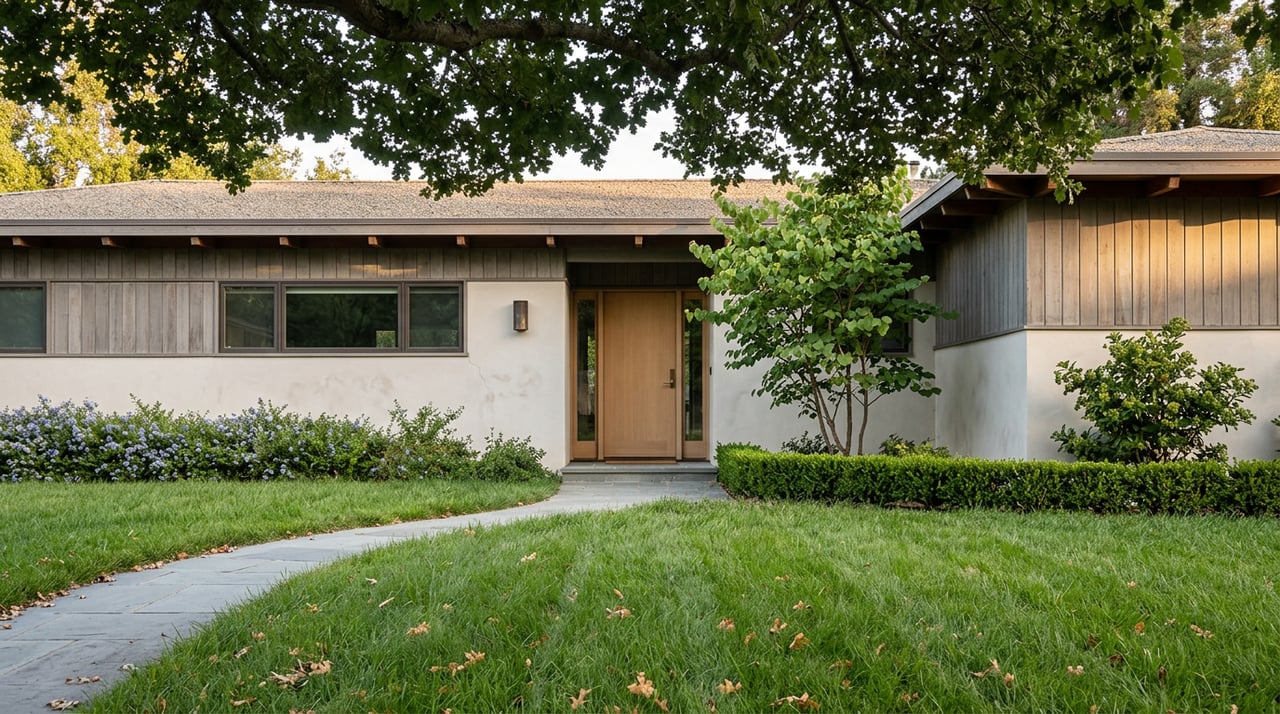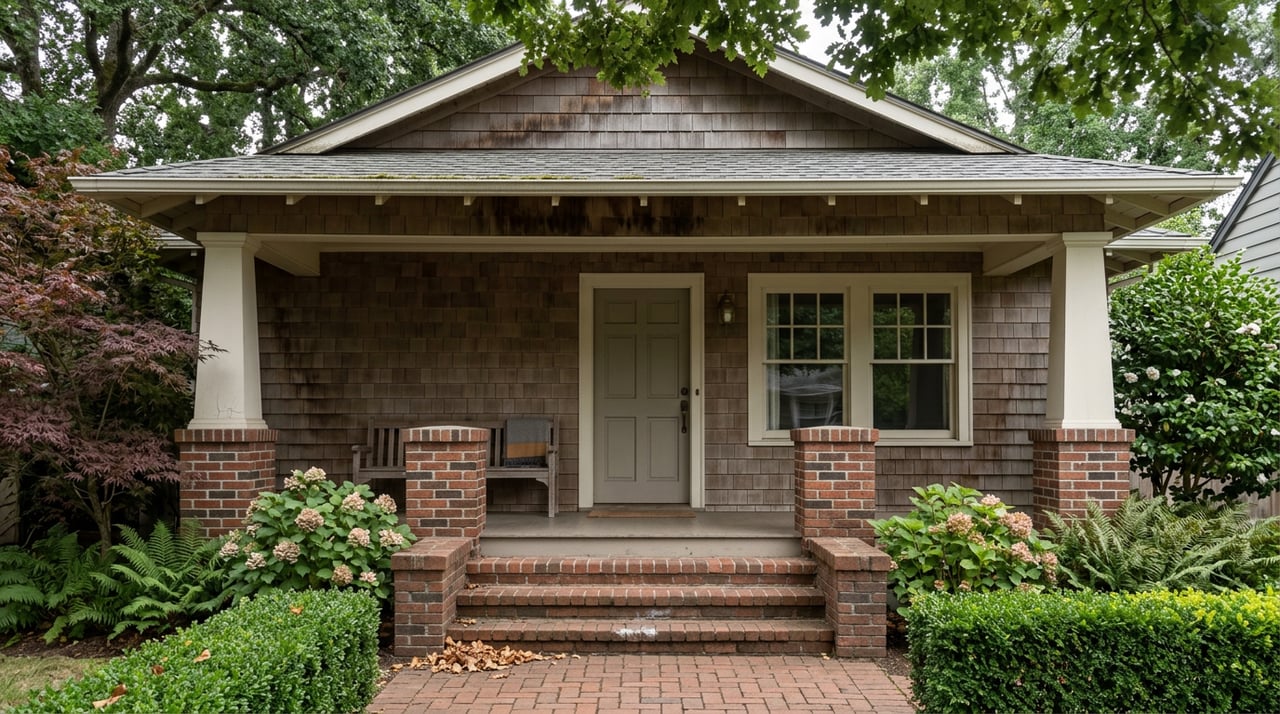
What happens when two houses, a few blocks apart, cost the same amount but come with entirely different bills?
That's the question a lot of buyers skip when they're comparing a listing in Piedmont to something similar just across the line in Oakland, in Rockridge or Crocker Highlands. The homes might look interchangeable on a spec sheet. The tax structure underneath them is not. Piedmont is a fully incorporated city, completely surrounded by Oakland but governed, policed, and funded on its own. That single fact shows up as a real number on your closing statement and on every property tax bill after it, and it's worth understanding before you decide what the Piedmont premium is actually buying you.
The tax bill has three layers, not one
Every homeowner in California pays a county ad valorem property tax under Proposition 13, reassessed at the time of purchase. That part is the same whether you buy in Piedmont or in an Oakland neighborhood next door. What's different is what gets stacked on top.
Piedmont funds its own police department, fire department, and public works crews through a dedicated Municipal Services Special Tax, commonly called the City Services Tax. It's a flat parcel tax, not tied to your home's sale price, and it scales with lot size. For the fiscal year that started July 1, 2026 and runs through June 30, 2027, the rates are:
| Parcel Type | Rate |
|---|---|
| Single-family, 0 to 4,999 sq ft | $753 |
| Single-family, 5,000 to 9,999 sq ft | $847 |
| Single-family, 10,000 to 14,999 sq ft | $978 |
| Single-family, 15,000 to 20,000 sq ft | $1,116 |
| Single-family, over 20,000 sq ft | $1,274 |
| Multi-family, per unit | $522 |
This tax has funded roughly 7% of the city's general fund and has been renewed by voters without interruption since 1981. The most recent renewal, Measure F, passed in March 2024 with a 20% rate increase, adding $11 to $19 a month for most households and extending the tax for 12 years instead of the usual four. Part of that increase paid for a second 911 dispatcher at Piedmont's own dispatch center, a staffing gap that had gone unaddressed since 1978.
Then there's a second, separate parcel tax, this one from the Piedmont Unified School District. In June 2026, voters extended an existing $3,174 annual parcel tax indefinitely, until it's modified or repealed at the ballot box. It passed with about 82% support in a district of roughly 2,500 students, well above the two-thirds threshold required. That's a tax layer that doesn't exist in the same form for a comparable house in Oakland, where school funding runs through the much larger Oakland Unified budget instead of a city-specific assessment.
Add those two special taxes to the standard county rate and a Piedmont homeowner is paying meaningfully more in dedicated, non-negotiable parcel assessments than a buyer of an identically priced home a few streets away in Oakland. Local budget watchdogs, including the Piedmont Civic Association, have flagged this stacking effect in public comment letters, noting that Piedmont carries one of the higher aggregate tax burdens among comparable Bay Area cities. If you want the exact total for a specific address, the Alameda County Assessor's Office can break it down parcel by parcel.
What's changing before the ink is dry on your offer
This isn't a static system. The city just adopted its FY2026-27 budget in June 2026, and buried in that vote was a decision to place a real estate transfer tax increase on the November 2026 ballot, raising the rate from 1.3% to 1.75%. City staff describe it as bringing Piedmont's rate in line with neighboring cities, and it's projected to generate an additional $1.5 million a year. It only requires a simple majority to pass, a lower bar than the two-thirds needed for the parcel taxes.
The transfer tax is typically paid by the seller at closing, so if you're buying now, it doesn't touch your purchase. If you're planning to sell in the next several years, it's worth watching how the November vote lands, since it changes the math on your eventual exit.
The city also just finished two of the largest capital projects in its history: a new all-electric Community Pool and a new 9-1-1 Dispatch Center. Officials describe the year ahead as a shift from major construction to long-term operations, which in practice means less capital spending pressure but ongoing staffing and maintenance costs that the existing tax base has to absorb.
Why the price signals contradict each other
Here's where the small size of this market actually distorts the numbers you'll see on any home search site, and where you have to read past the headline.
Over the three months ending May 2026, the median sale price in Piedmont was $3.1 million, up 9.8% from the same period a year earlier, with homes selling in an average of 12 days. That's a seller's market by any definition. At the same time, asking prices told a different story. In August 2026, the median list price sat at $2.49 million, down modestly from the same month last year. Zillow's home value index, which tracks estimated values rather than closed sales, showed a 12.1% year-over-year gain as of the end of July 2026.
Three different measurements, three different directions. None of them is wrong. They're measuring different things in a market too small to average out the noise.
Piedmont has fewer than 4,000 homes total, and it's almost entirely built out. There were 43 recorded sales in May 2026, up from 27 the year before, which sounds like a healthy increase until you remember that a swing of a dozen transactions can move a median by hundreds of thousands of dollars depending on which few houses happened to close that month. A single large estate sale or a cluster of smaller starter homes can bend the number in either direction. That's also why sellers here can price conservatively and still watch a home close well above ask. In a market this competitive, an intentionally modest list price isn't a signal of softness. It's often a strategy to generate a bidding pool, which explains why asking prices can drift down even as closed sale prices climb.
Piedmont's own stringent permitting guidelines add to the supply constraint. Additions, remodels, and exterior changes go through a design review process meant to preserve the city's architectural continuity, which is part of what keeps the housing stock consistent but also part of why new inventory almost never appears. When a Piedmont home does trade, you're not just competing for a house. You're competing for one of a genuinely limited number of parcels that will change hands at all this year.
What this means if you're comparing neighborhoods
None of this is an argument against Piedmont. It's an argument for pricing the whole package, not just the sale price, when you're weighing it against a similarly priced home in Rockridge, Crocker Highlands, or Montclair. A buyer choosing between two $2.5 million listings, one inside Piedmont's city limits and one just outside them, is really choosing between two different municipal funding systems: one where police, fire, and school costs are carried by a small, dedicated parcel base spread across fewer than 4,000 homes, and one where those same services draw on Oakland's much larger tax base and budget. Neither structure is inherently better. They produce different carrying costs, different service models, and different long-term exposure to the kind of ballot measures that just added a school parcel tax and may soon add a higher transfer tax.
If you're comparing the two seriously, ask for the specific parcel size and use classification on any Piedmont listing before you estimate your City Services Tax line, and ask your lender to model the school parcel tax as a fixed annual cost rather than folding it into a general property tax estimate. The county assessor's office can confirm the exact combined total for any address.
A few questions worth asking before you write an offer
Does the city tax replace my county property tax? No. The Municipal Services Special Tax and the school district's parcel tax are both layered on top of the standard Alameda County ad valorem tax, not in place of it. All three appear separately on your annual bill.
If I buy now, will the proposed transfer tax increase affect me? Not at purchase. The transfer tax is paid at the time of sale, typically by the seller, so a rate change on the November 2026 ballot would only apply when you eventually sell, not when you buy.
Why do list prices and sale prices seem to disagree? Because the market is thin enough that a handful of transactions can move either metric independently. Asking prices in a competitive micro-market are sometimes set deliberately low to invite multiple offers, which is part of why sale prices have outpaced list prices this year.
Piedmont's numbers reward the buyer who reads past the headline. If you're weighing a Piedmont address against something similar across the Oakland line and want the real math run for your specific situation, Dan Walner can walk through the full tax picture, the current inventory, and what a competitive offer actually looks like in a market this small.